



Specialty medications and biologics are among the most effective treatments available for complex chronic conditions, and they are also among the most expensive. Monthly costs for these drugs can reach thousands of dollars, putting them entirely out of reach for uninsured and underinsured patients without structured support. RX assistance programs exist for many of these medications, but the process for accessing them is different from standard drug assistance and worth understanding before you apply.
What Makes Specialty Medications and Biologics Different
Specialty medications treat complex or rare conditions and require special handling or administration. Biologics, a subset of specialty drugs derived from living organisms, are used to treat conditions such as rheumatoid arthritis, multiple sclerosis, and certain cancers.
Many manufacturer patient assistance programs for these drugs ship directly to a specialty pharmacy or physician’s office rather than to your home address, which is worth knowing before your first shipment is due.
How Manufacturer Programs Approach These Medications
Most major manufacturers have dedicated patient assistance programs for medications covering specialty and biologic drug categories, but they require more than a standard application.
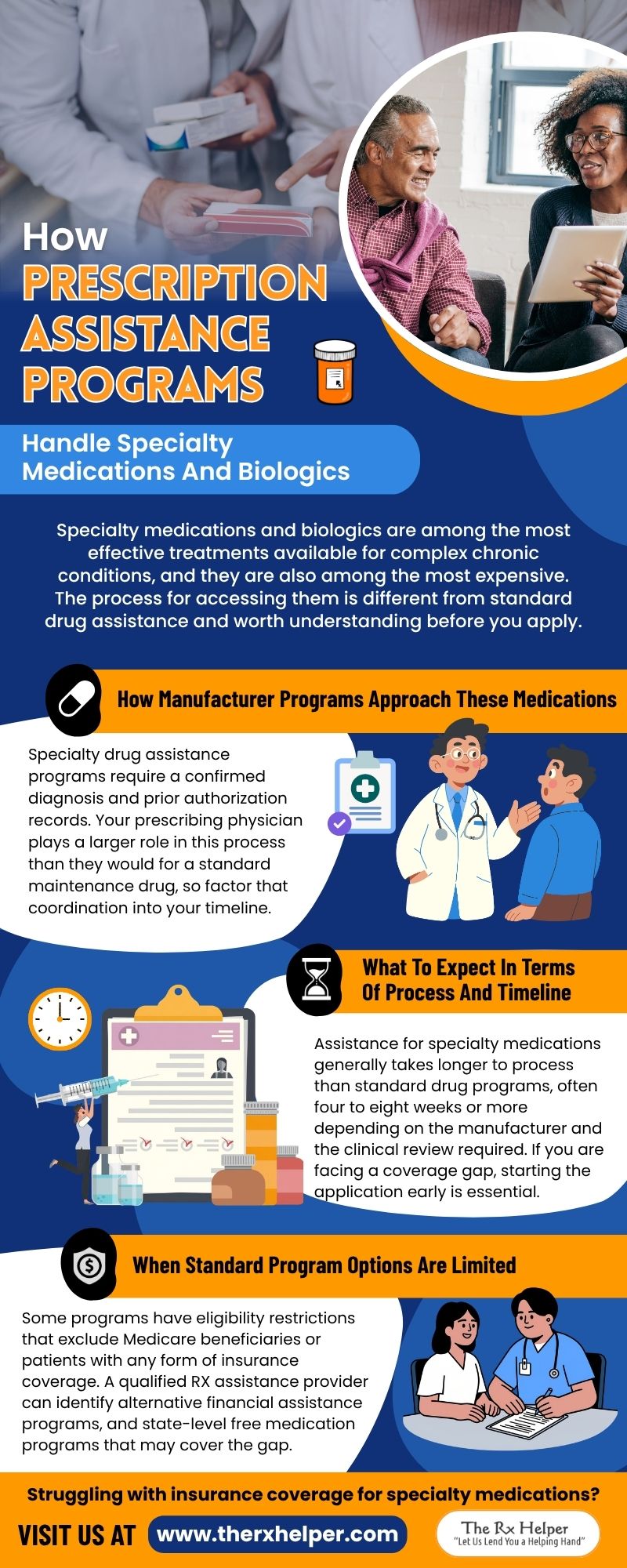
Specialty drug assistance programs typically require detailed clinical documentation including a confirmed diagnosis and prior authorization records. Your prescribing physician plays a larger role in this process than they would for a standard maintenance drug, so factor that coordination into your timeline.
What to Expect in Terms of Process and Timeline
Assistance for specialty medications generally takes longer to process than standard drug programs, often four to eight weeks or more depending on the manufacturer and the clinical review required.
If you are facing a coverage gap, starting the application early is essential. Some manufacturers offer bridge programs that provide a short-term medication supply while your full application is under review.
According to the Patient Advocate Foundation, specialty pharmacies work closely with financial assistance programs to help patients access medications, and asking your specialty pharmacist directly about bridge or starter supply options is one of the most practical first steps you can take.
When Standard Program Options Are Limited
Not every specialty medication has a manufacturer assistance program, and some programs have eligibility restrictions that exclude Medicare beneficiaries or patients with any form of insurance coverage.
In these cases, a qualified RX assistance provider can identify alternative pathways, including disease-specific nonprofit foundations, hospital-based financial assistance programs, and state-level free medication programs that may cover the gap.
According to the National Organization for Rare Disorders, disease-specific patient advocacy organizations often administer their own financial assistance programs for high-cost biologics and specialty drugs, particularly for patients with rare or complex diagnoses.
These programs operate independently of manufacturer PAPs and can serve patients who do not qualify through traditional channels.
Getting Help With High-Cost Prescriptions
The Rx Helper is a patient prescription assistance company that works with patients managing specialty medications and biologics alongside standard prescriptions. We identify which RX assistance programs are active for your specific medications, manage the application and documentation process, and follow up with manufacturers and specialty pharmacies so you do not have to. Patients dealing with high-cost specialty prescriptions are encouraged to reach out to us to find out what affordable medication programs are available for their treatment plan.